
Oxford Debate Championships II: Wrocław, Poland
Scaling KAIZEN™ and Sustainability Education Through the 2nd KAFCIA Oxford Debate Championships in Poland.
Event
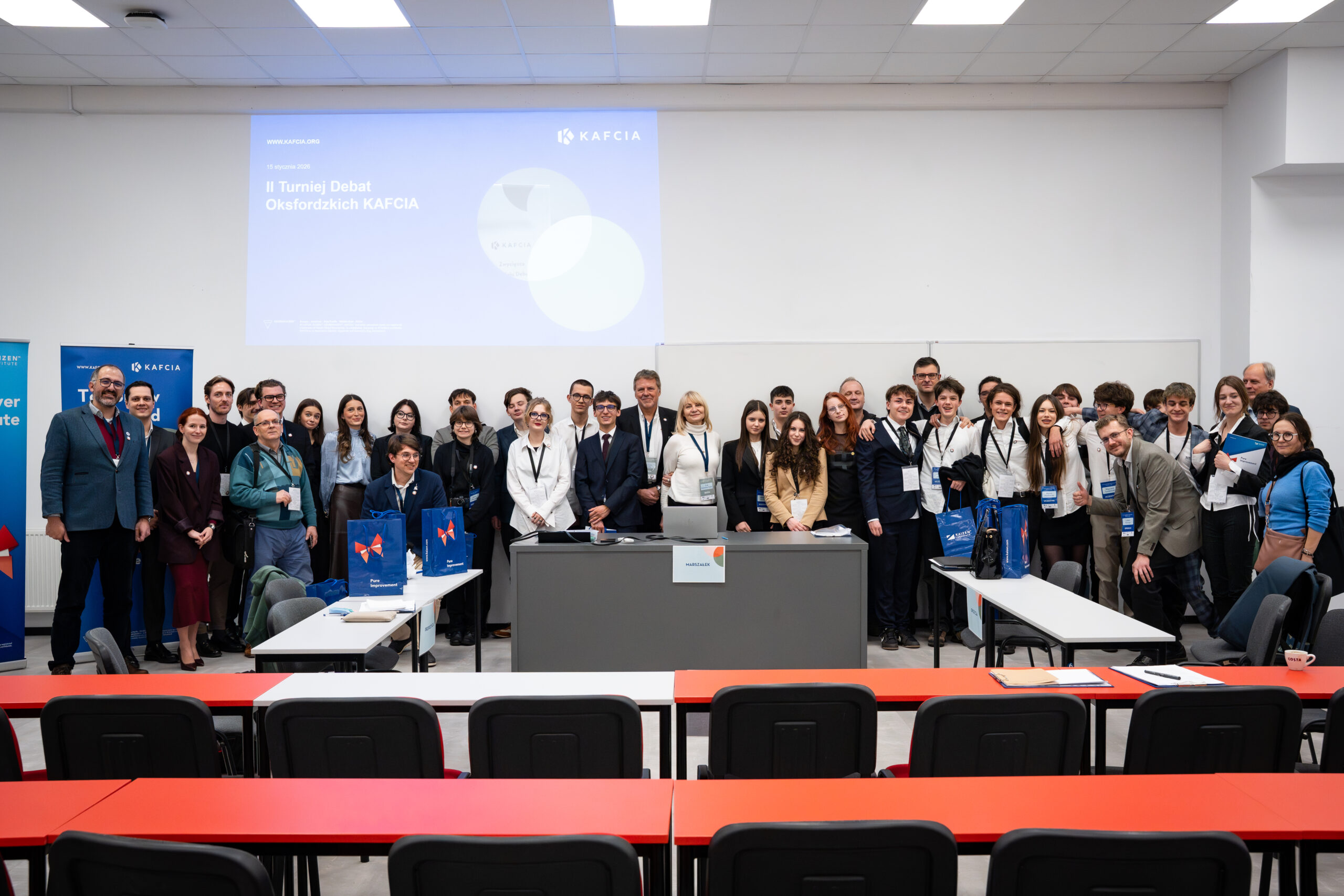
The second edition of the KAFCIA Oxford Debate Championships took place from October 2025 to January 2026, with the event taking place on January 15, 2026. This initiative strengthened young people’s awareness of the KAIZEN™ methodology, enhanced their understanding of sustainable development and helped them develop practical soft skills through workshops and Oxford-style debating.
Jakub Czajka
"The second edition of the KAFCIA Oxford Debate Championships clearly showed how powerful experiential learning can be when young people are given the right tools and space to grow. We saw students confidently applying KAIZEN™ thinking to complex, real world challenges and translating abstract concepts into practical arguments. What stood out most was their openness to continuous improvement and their willingness to reflect, adapt, and learn from feedback. For us as a foundation, this confirms that combining debate-based education with KAIZEN™ principles creates lasting value not only for students, but for the wider educational ecosystem."
Board Member | NGO Fundacja Projekty Edukacyjne
Context
In many educational environments, students and teachers still lack access to practical frameworks that support continuous improvement, responsible decision making, and future focused thinking. Traditional curricula often prioritize academic outcomes, leaving limited space for actionable life skills such as structured problem-solving, collaboration, and sustainable habits.
This KAFCIA project responds to the current gap by offering an engaging and accessible platform where young people can both learn and practice continuous improvement thinking in real-life contexts. By combining KAIZEN™ principles with debate-based learning, this initiative builds critical thinking, communication, and confidence skills, that are essential for life beyond school.
Objectives & Scope
Key Objectives:
- Increase awareness of KAIZEN™ philosophy among young people, helping them recognize inefficiencies and apply small improvements in everyday life.
- Deepen participants’ understanding of sustainable development, encouraging responsible, long-term thinking.
- Develop soft skills that are essential for future personal and professional growth, including teamwork, communication, improvisation, and resilience under pressure.
The project followed the same proven structure: Daily KAIZEN™ workshops delivered in participating schools, followed by a national Oxford Debate Championships as the final culminating learning experience.
The Approach
Breakdown of Methodologies Applied:
- Daily KAIZEN™ Workshops (in schools):
Delivered prior to the championships, the workshops introduced continuous improvement thinking and supported students in applying KAIZEN™ principles to daily routines, learning environments, and decision-making. - Oxford Debate Format (final event):
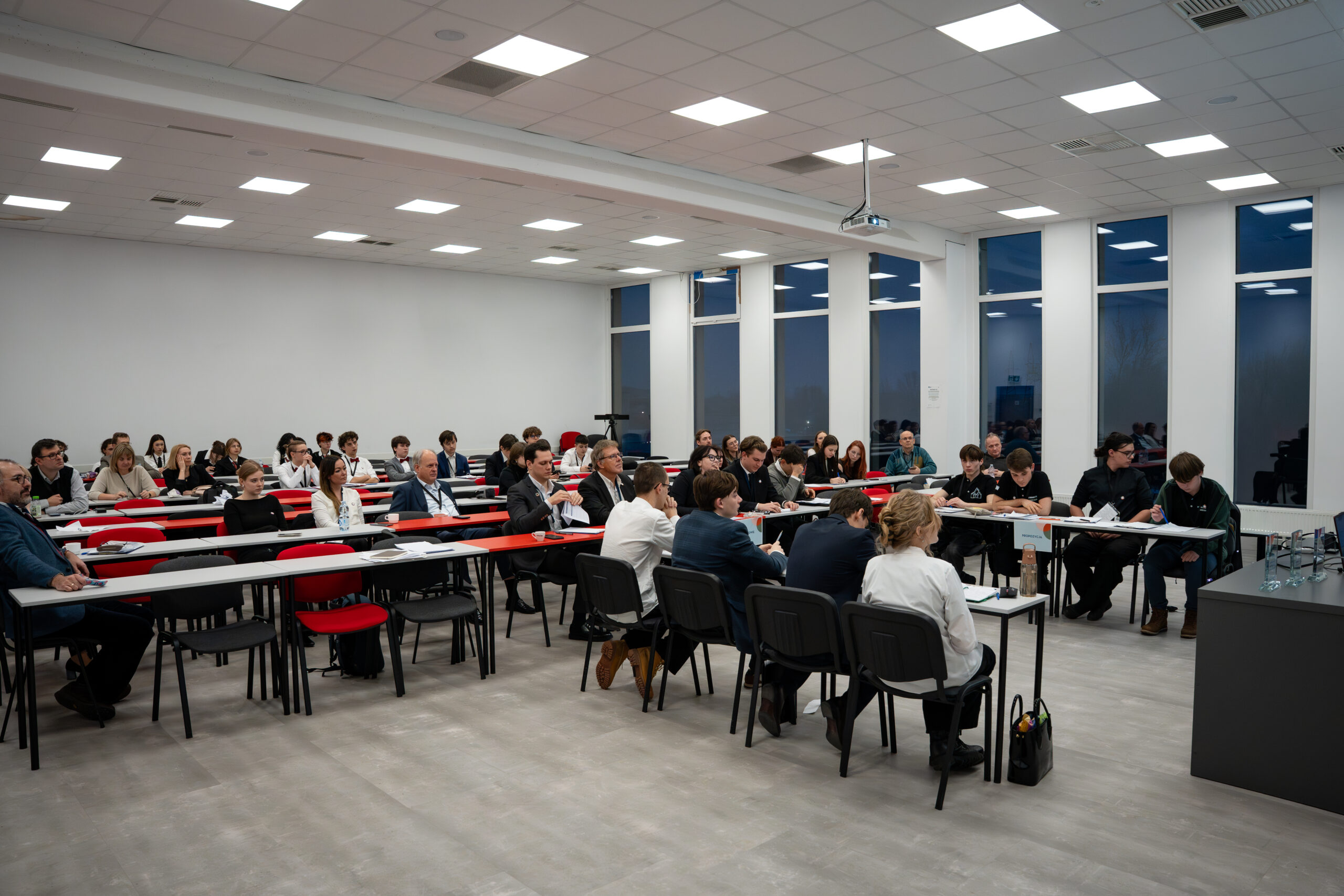
The championships used a structured debate methodology requiring participants to prepare, collaborate, and perform under time constraints that would help strengthen persuasion, critical thinking, and respectful dialogue. - Extended learning support through content:
One of the debate motions was supported through a dedicated episode of the KAIZEN™ Podcast, helping participants prepare more effectively and expand their knowledge beyond the workshops. (Episode #7, S2) - Expert judging and feedback:
The debate jury included consultants from Kaizen Institute Poland and representatives from NGO Fundacja Projekty Edukacyjne, ensuring high educational value through structured, constructive feedback.
Outcomes & Learnings
Quantitative Measures
- 8 schools across Poland participated in the project
- 90 students attended the Daily KAIZEN™ workshops
- 40 students competed in the final Oxford Debate Championships
- Approximately 100 participants attended the culminating event
Qualitative Measures:
- Strong motivation among students to re-engage in this initiative, alongside a growing interest from new schools
- Participants reported gaining new perspectives on complex challenges
- Participants gained an increase in confidence in high-pressure situations
- Students highlighted the practical, real-life applicability of KAIZEN™ principles
- The judges’ feedback was consistently mentioned as a key value driver, helping students reflect, improve, and learn through constructive evaluation
Key Insights
- Real-life applicability: The students recognized KAIZEN™ principles as a practical mindset for everyday improvement
- Confidence and resilience: The debate format strengthened improvisation, teamwork, and pressure management
- Continuous improvement culture: The combination of workshops and debates embedded a natural learn – reflect – improve cycle
"Initiatives like KAFCIA allow us to learn a completely new way of looking at the world and at other people. They help us truly understand what KAIZEN™ is and how it guides us toward self-improvement. Learning how to become better versions of ourselves, both in how we think and how we act, is something truly beautiful."
High school student from one of the participating schools in Gdańsk, Poland
Event Summary
The second edition strengthened both the educational impact and long-term sustainability of this initiative.
A key indicator of growing relevance was the increased demand: 26 schools applied, compared to 12 in the previous edition. This growth reflects rising awareness, trust, and perceived value of the program.
The NGO’s expanded engagement enabled a broader operational scale, reinforcing the initiative’s potential as a replicable national model. There has been an increased recognition from the City of Wroclaw which creates opportunities for deeper local collaboration and future public engagement.
Overall, the project continued to build a strong foundation for long term collaboration between education, NGOs, and the business community. This was done through supporting youth development with KAIZEN™ principles and sustainability-focused learning.
Future Collaborations and Other NGOs
The success of the second edition confirms that combining KAIZEN™ methodology with debate-based learning is an effective model for modern education, building both awareness and practical competencies.
With growing interest from schools and stakeholders, the initiative is well positioned for further expansion through:
- broader school participation,
- enhanced cooperation with local institutions, including the City of Wrocław,
- additional learning support, such as expanded podcast content and structured preparation materials
This approach has strong potential to shape and strengthen future generations of adaptable, sustainability-minded people who can think critically, collaborate effectively, and apply continuous improvement principles in everyday life.
For more details or collaboration inquiries, please contact kafcia@kafcia.org.